
SPECIAL GUEST POST: Final Installment, "A Short, Strange Trip" (excerpt), by John O'Connor
The end for Terence McKenna
Dear Readers,
This is the final installment of our serialized excerpt from John O’Connor’s new book, A Short, Strange Trip: An Untold Story of Magic Mushrooms, Madness, and a Search for the Meaning of Life in the Amazon. If you missed the earlier installments, you can find them here: Part I , Part II, Part III, Part IV, Part V, Part VI, Part VII, Part VIII.
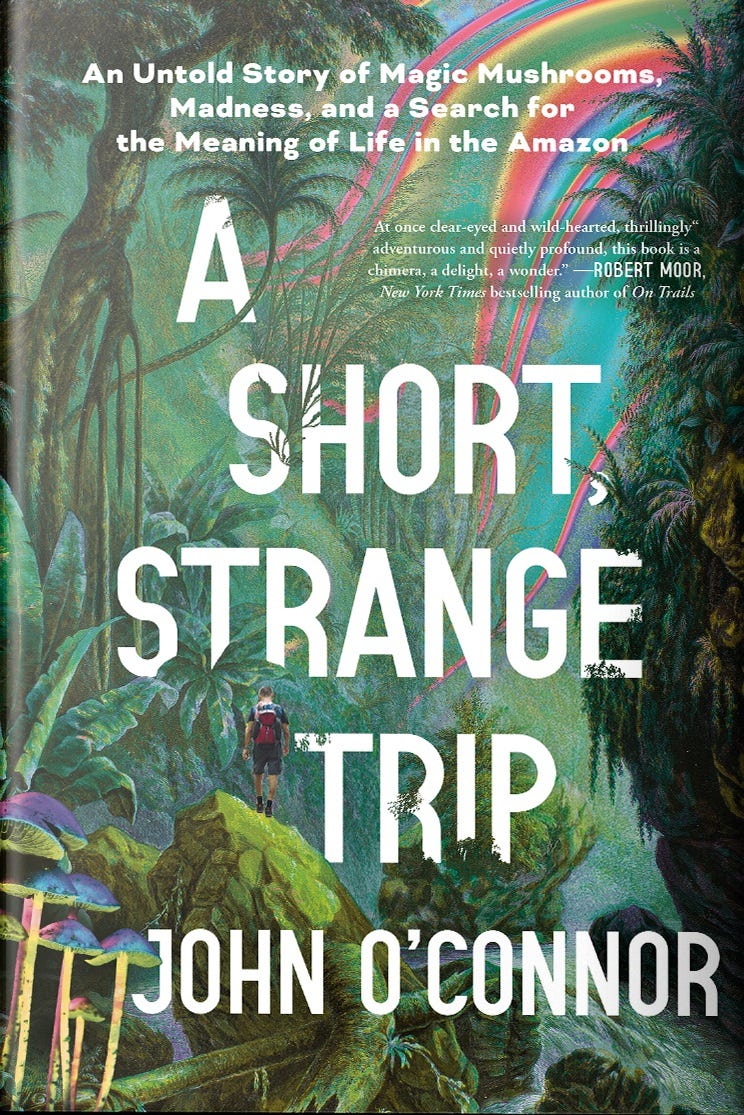
***
The end came suddenly.
On May 22, 1999, after complaining of headaches and exhaustion, Terence collapsed at home in Hawaii. He’d always suffered from migraines, but this was something else. His girlfriend, Christy Silness, dialed 911. As they waited for an ambulance, Terence suffered a seizure, then another. A CAT scan revealed a shadowy growth in the right front quadrant of his brain. A doctor diagnosed glioblastoma multiforme, a malignant tumor, going so far as to describe it as a “fruiting body” that spread “mycelia” through surrounding tissue. Terence was told he likely had less than a year to live. “No one escapes,” the doctor said.
It was something of a miracle he’d made it this far, aged fifty-three, considering how adventurous and mind-expanding his life had been. There were times, in the hash-smuggling days, when he’d had one foot in a hippie grave.
One of the pleasures of writing this book has been to watch him flourish and forge a path to becoming who he was. Not that he ever fell into line. Just that his personal freedom became more important than open rebellion.
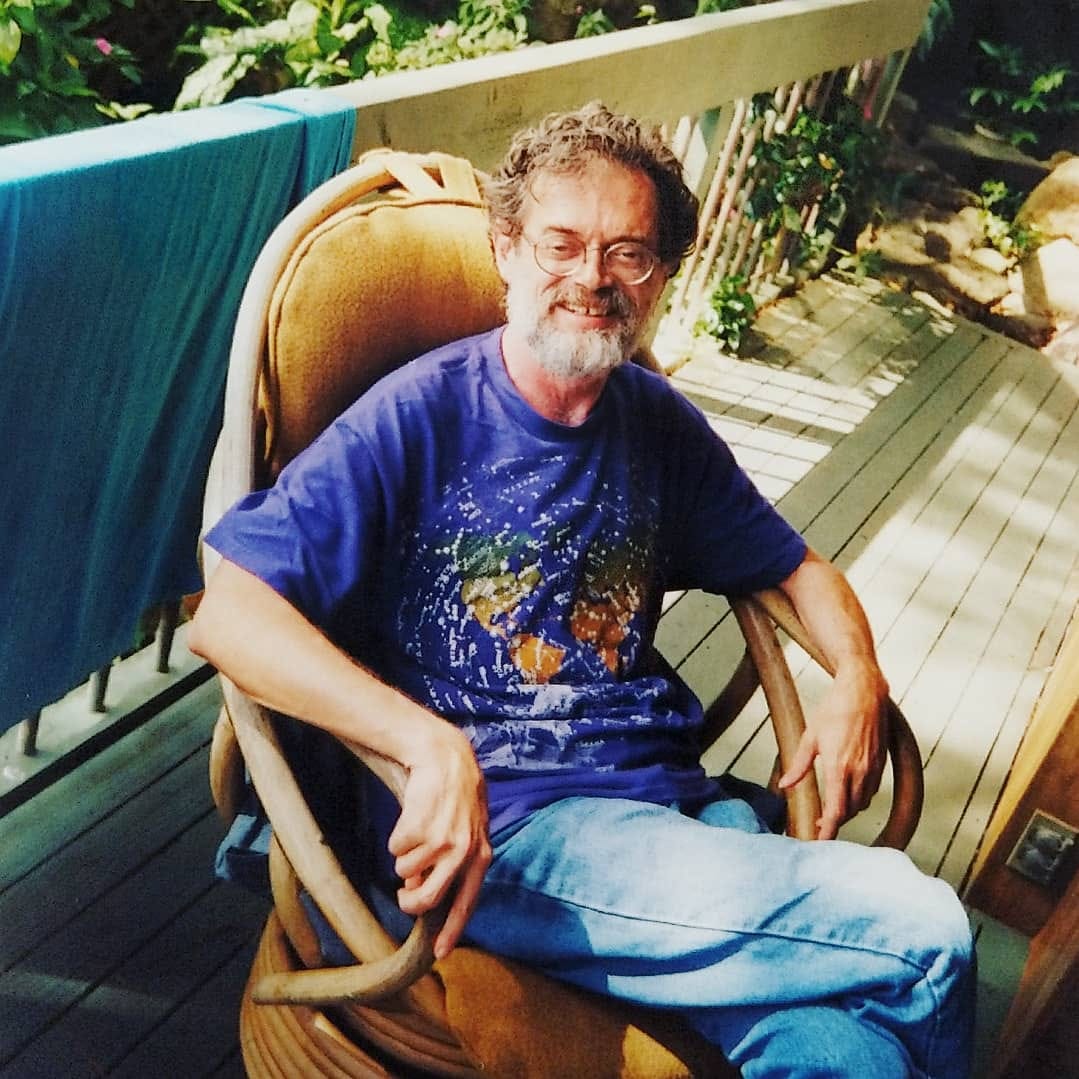
It’s about freedom that Terence had so much to tell us. A way to describe his cruelly short life is as a quest for absolute freedom at all costs—freedom from war, oppression, grief, politics, even death. “Freedom on the broadest scale,” he said, at a time when the relationship between freedom and American-style democracy was being challenged on all sides.
You don’t have to buy Terence’s framing of things to see that he was substantially correct in his appraisal of establishment laws and norms that make mincemeat of certain unalienable rights. The war on drugs, the mass incarceration of our most marginalized citizens, and the expansion of American military power abroad and other authoritarian threats at home, were often on his mind. It’s why he wanted us to seize the consciousness-expanding reins. We have an obligation, he told us—to ourselves, to others, our country, the planet—to put ourselves in “control of the machinery that generates reality” and “create a community based on love and tolerance.” Hardly a radical idea, he knew, “yet incredibly difficult to bring into existence.”
A free spirit, freer than most, Terence was also painfully awake to the desolation awaiting each of us just around the corner. In his workshops and talks, through days and years of listening to others, he often repeated these famous lines of Andrew Marvell’s: “But at my back I always hear / Time’s winged chariot hurrying near,” not out of a sense of defeat or despair, I don’t think, but because he knew that whatever time is given to us is never enough. And so he contrived a rapturous new universe where none of it mattered, where we could bend death to our will and live freely, without regret, happily ever after. He wrote and said all he could on the subject, finding few ideas more electrifying than freeing our collective souls from their self-imposed prisons. This transcended tribe and country, politics and class, even the nature of reality, and insisted that all were equally deserving.

Psychedelics marked the beginning of that process. “It seems to me that we need all the help we can get,” he said.
We want freedom. We want freedom from the constraints of the cycles of the sun and the moon. We want freedom from drought and weather, freedom from the movement of game, and the growth of plants. Freedom from control by mendacious popes and kings, freedom from ideology, freedom from want. And this idea of freeing ourselves [is] the compass of the human journey. That which doesn’t free doesn’t serve.
In the end, everything’s going to be okay, he once remarked to a friend. “It’s a done deal... We’re going to make it.”

As his illness progressed, Terence wondered whether “a lifetime of recreational experimental drug taking” had anything to do with it. Or perhaps his “messing around with rocket fuel as a kid, or chemicals associated with collecting plants and insects?”
They must’ve been truly dreadful days. But his embrace of his admirers accelerated, thanks in large part to the burgeoning internet. More of his private life filtered into his correspondence. After undergoing a noninvasive gamma knife surgery, which shot beams of radiation at the tumor, he wrote on his website: “I am being taught many things and I welcome this. And I welcome the love and support of friends, this is a mad and wild adventure at the fractal edge of life and death and space and time. Just where we love to be, right, shipmates?”
Dennis, the man of science, grew weary of medical approaches to his brother’s illness. He thought a more radical intervention was required and wanted to perform a “shamanic surgery” with psilocybin and yagé. “I saw the tumor as an evil black spider extending its lethal web through Terence’s brain. He was an insect futilely struggling in that web, desperately seeking an escape.” Terence reluctantly agreed. He took a small amount of psilocybin while Dennis and friends, massaging Terence’s head, made the hypercarbolation scream, to little effect. “My brother obviously distrusted me and held himself back,” Dennis recalled.
In October, Terence underwent a craniotomy operation at the UCSF Medical Center, followed by experimental gene therapy. At first, the combination seemed to completely excise “the malignant spider,” removing all traces of the tumor. In high spirits, he decided to attend an ethnobotany conference in Mexico. But by January 2000, the tumor had metastasized, a rare development for glioblastoma, which tend not to spread beyond the brain. His doctors again gave him little hope.
*
“Alone again, I have gone hunting for those rare places and times, the nodes at which the layers of experience touch and may be fused together.” —TIM ROBINSON
I wondered what it was like for him. The wash of despair. So weakened he could barely walk. I wondered if, after all his talk of exalted states, he was at peace with himself, at peace with his life? There are many ways to think about death: as a pit cold and dark, as a portal to a sublime wonderland, as “a permanent cessation of all vital biological functions,” per Webster’s, as “the black hole of biology,” per Terence.
Proserpina, queen of the underworld in Roman myth, found a commonality among them all, spending half of each year in Hades and half on Mount Olympus, like snowbirds flitting between Beacon Hill and Albuquerque, their sense of home being a permanent state of impermanence.
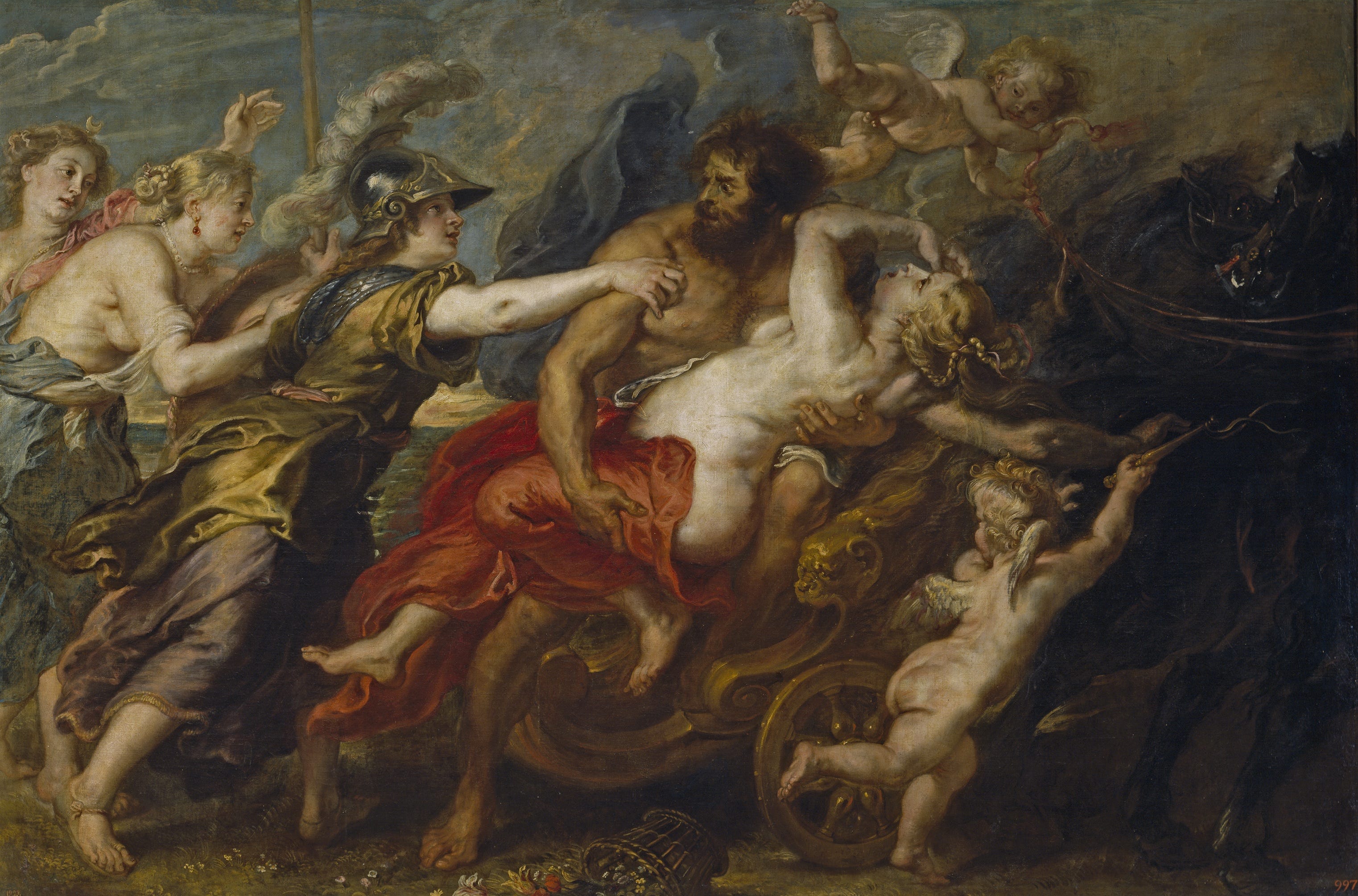

As Terence knew, Proserpina symbolized the imperishableness of human life, or at least the idea of it, and for that reason was worshipped by initiates in the Eleusinian Mysteries. Moses, never one to be upstaged by his pagan forebears, wanted to extend eternal life to all of us, making him the first truly democratic idealist in the Bernie Sanders mold. It’s said that while ascending Mount Sinai to receive divine instruction, he was awed to discover that “Under his feet was something like a pavement made of lapis lazuli, as bright as the sky,” hinting at the wonders to come. This vision of a perfect hereafter was, for Terence, as it is for so many, the most absolute and necessary fiction.
Whatever he was facing, Terence told an old friend, it made life suddenly “rich and poignant.” He could, initially, “see the light of eternity, à la William Blake, shining through every leaf...a bug walking across the ground moved me to tears.”
When asked what psychedelics had to teach us about death, Terence drew an analogy to Buddhism. “Taking plants and spending your life in esoteric philosophy and taking drugs is basically a meditation on death,” he said. “Buddhism is some form of learning how to die.” How so? “Nothing lasts. That’s one thing I think you learn from life, psychedelics, or just paying attention. Very little lasts. These Buddhists aren’t kidding: you are here for a very brief moment, and you can sit on your thumb and do whatever you want, but in fact the clock is ticking. What are you gonna do about it?”

He spent his final months at a friend’s house in Marin County. In April, Sara Hartley attended a farewell party there—she called it “the death party”—and said good-bye. Everyone knew it’d be the last time they saw him. Silent and remote, Terence, who could no longer walk, was confined to his wheelchair.
“I said, ‘Terry, I forgive you,’” Sara told me, explaining that they’d become estranged after La Chorrera. “He thought I hadn’t supported him enough. He always wanted everyone to get along. He was such a sweet and docile person,” she said. “And I wanted him to know that I forgave him. I don’t know if he heard me.”
On March 28, Terence suffered a stroke that left him partly paralyzed. Dennis, at his bedside, struggled for words. “I love you,” he said finally. “I forgive you. I ask that you forgive me.”
Christy was the only one with him when he died, on the night of April 3. Around 2:00 a.m., Terence stirred suddenly, “lifted himself up from the mattress, and tried to say something. His face was transfixed in an expression of ecstasy. Then he settled back, let out a long sigh, and was gone.”